Ancient Egyptian Jewelry
Jewelry has played various roles in ancient Egypt. In addition to man's
natural attraction to beautiful items, jewelry had a religious and magical
significance in the Egyptian ancient world by protecting the wearer from evil.


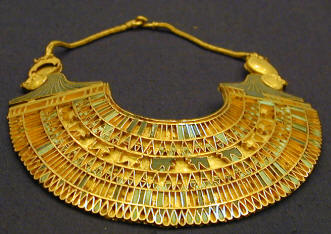
Ancient Egyptian gold jewelry artifact exhibit in the Egyptian museum in
Cairo |
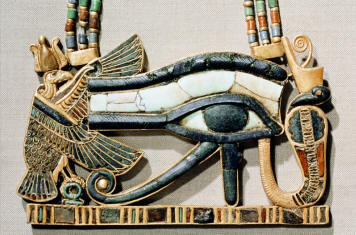
Eye of Horus |
Ancient Egyptians began making their jewelry during the Badari and Naqada
eras from simple natural materials; for example, plant branches, shells, beads,
solid stones or bones. These were arranged in threads of flax or cow hair. To
give these stones some brilliance, Egyptians began painting them with glass
substances. Since the era of the First Dynasty, ancient Egyptians were skilled
in making
handmade silver and gold jewelry featuring solid semiprecious stones. The art of goldsmithing reached its peak in the Middle Kingdom,
when Egyptians mastered the technical methods and accuracy in making pieces of
jewelry. During the New Kingdom, goldsmithing flourished in an unprecedented way
because of regular missions to the Eastern Desert and Nubia to extract metals.
These substances were processed and inlaid with all sorts of semiprecious stones
found in Egypt; for example, gold, turquoise, agate, and silver.
related articles:
- Ankh - eternal life symbol.
Shopping for Egyptian jewelry:
We sell silver jewelry items online on our web shop and ship them direct from Egypt.
If you would like to buy handmade jewelry, you
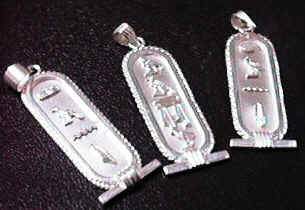
can order silver articles online like amulets, charms, bracelets and cartouches
from tour online store. Shipping fees starts from $20. We ship to all
countries (please read our note on shipping to
Australia)
|
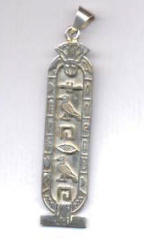
Cartouche |
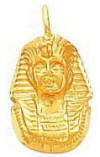
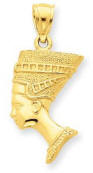
The following gold jewelry items are sold on Amazon and shipped from
USA as it is not permitted by the Egyptian customs authority to ship gold
articles by courier service directly from Egypt. Now our customers can
buy gold pendants and other jewelry online and have them delivered to
your address (subject to shipping terms and conditions of each product).
|
Jewelry was used in daily life throughout the Pharaonic era until the Roman
times. Egyptians were keen to keep a good number of jewelry pieces in the tomb;
these were placed on the body of the deceased. A large number of such jewelry
was found in tombs; for example, wreaths, crowns, or hair bands. On the head or
wig, they fixed different types of ornaments, such as small roses, golden bands,
and some simple bands of jewelry. There were also different types of belts,
including waist belts and belts with hanging vertical straps ornamented with
colored beads. Other types of jewelry included earrings, bracelets, anklets,
rings, and necklaces.
A unique type of jewelry that never appeared in other cultures was the vest,
which was worn around the chest. It was usually made of gold or of gold-plated
metal. Even when it was made of a cheap material, it was painted yellow to give
a golden impression. Wearing a golden vest is still an existing folklore
practice in the Egyptian countryside, though it has a different name, the Kirdan.
Every village girl dreams of wearing a golden one to boast of.
Ornaments and jewelry were not restricted to women. Men also used jewelry
until the Roman era in Egypt. However, since the advent of Christianity in
Egypt, with many people converting to that new religion, ornaments and
extravagant luxury began to be less common and were replaced by manifestations
of piety, religiousness, and righteousness. Most jewelry was made of cheaper
materials bearing Christian symbols, such as crosses, pigeons, and the Egyptian
Ankh sign, instead of the amulets that were used before. After the arrival of
Islam in Egypt, men in particular were prohibited from wearing gold jewelry, but
continued to use jewelry made of other materials, such as silver.
Several different types of sticks were found that were used for ceremonial
staffs, scepters, flyswatters, hooked staffs, and walking sticks. They were
usually made of wood and sometimes gold plated and inlaid with precious stones.
Today Egyptian jewelry makers make beautiful imitations of ancient Egyptian
jewelry which are sold in jewelry stores or on online shops on the Internet.
Most of the Paharaonic style jewelry are silver and gold utilizing the Ankh
symbol, cartouche and ancient Egyptian gods, kings and queens.
Tips of cleaning silver jewelry:
Most of the Egyptian silver used to make jewelry is 800 which is less in
quality than Sterling silver which is referred as silver 900 or 925 (the number
represents the percentage of silver in the metal, being 900=90% silver). The 800
silver is good in making Ancient Egyptian style jewelry but requires more care
because it develops tarnish, or scratches after a while. In that case all you
have to do is to clean the silver item using baking soda and a clean, damp
sponge or a piece of cloth. Make a paste of baking soda and water. Scoop the
paste onto the sponge, and rub the paste into the silver. Rinse with hot water
and dry with a soft, clean cloth.
Quick links:
 |
 |
 |
| Egyptian silver scarab pendant with blue back Buy |
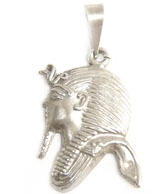
Egyptian pendant of king Tutankhamun bust
made of silver
Buy |
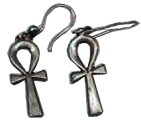
Silver earrings of Egyptian ankh symbol Buy |
More Egyptian jewelry
to buy
Books on Ancient Egypt
Back to Egypt History page
|
 Egypt
Gift Shop
Egypt
Gift Shop